Gulya: A Playful Font for Creative Projects
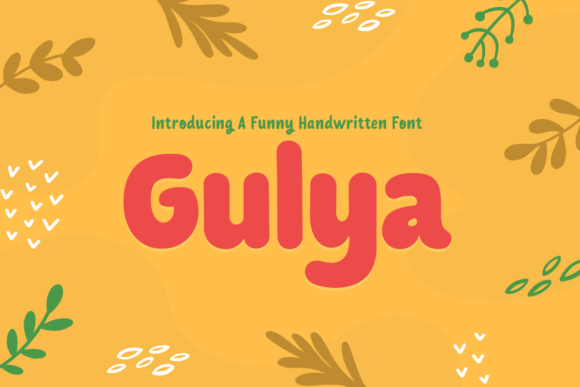
There I was, staring at a blank brand board, trying to figure out how to make a small café feel more inviting. The client wanted something warm, approachable, and just a little bit whimsical. I reached for my font library and stumbled on Gulya—a handwriting font that felt like it had been scribbled by a kid with a crayon. It wasn’t what I expected, but it was exactly what the project needed.
Gulya has a distinct personality. It’s not the polished script of a traditional typeface; it’s more like a child’s doodle turned into a font. The strokes are uneven, the curves are soft, and there’s a sense of spontaneity in every letter. It doesn’t try to be perfect—it embraces its quirks. That’s what makes it so appealing for projects that need a friendly, human touch.
Testing Gulya in Real Design Work
I started by placing it on a logo draft. The café’s name was simple—something like "The Cozy Bean." I typed it out in Gulya and immediately felt the tone shift. It wasn’t just a logo; it felt like an invitation to relax. The font added a sense of playfulness without being too childish. It worked well as a headline, catching the eye while still feeling approachable.
Next, I tried it on packaging mockups. For a coffee bag or a menu, Gulya brought a sense of warmth. It didn’t work as well for body text, but as a display font, it shone. I paired it with a clean sans serif for the details, which helped balance the design. The contrast made the branding feel more structured while still maintaining that playful edge.
On a shop sign, Gulya looked great. It gave the café a handmade feel, like the owner had written the name themselves. It wasn’t overly formal, but it was legible from a distance. That’s important for signage—readability is key, even when you’re going for a quirky look.
When to Use Gulya
Gulya works best as a display or headline font. It’s not ideal for long paragraphs, but as a short-form text, it adds character. In logo design, it can be a strong choice if the brand wants to communicate fun, creativity, or a personal touch. It also pairs well with other fonts, especially those with a clean or classic style.
For editorial design, like a brochure or flyer, Gulya can add visual interest. It’s perfect for headings or captions, where a bit of personality goes a long way. On social media graphics, it gives a more casual, authentic feel. It’s great for Instagram posts, banners, or promotional materials where a handwritten look is desired.
In web design, Gulya can be used for hero sections or call-to-action buttons. It adds a unique flair that stands out from standard fonts. However, it’s important to test it across different screen sizes to ensure it remains readable and doesn’t lose its charm.
Design Considerations and Practical Tips
Before using Gulya in a full brand system, I always recommend testing it in various contexts. Try it on business cards, labels, and packaging to see how it performs. Pay attention to spacing and alignment—handwritten fonts often require more careful kerning to look balanced.
If the client wants a more professional look, consider pairing Gulya with a serif or sans serif font. This creates a nice contrast and helps maintain visual hierarchy. For example, using Gulya for headlines and a modern sans serif for body text can give the design both personality and clarity.
Also, check the font’s file formats and licensing. Make sure it’s suitable for commercial use, especially if you’re designing for a client. Some fonts have restrictions on how they can be used, so it’s good to verify that upfront.
Real-World Applications
One of the most rewarding parts of using Gulya was seeing how it translated to real-world materials. On a label sticker, it gave a homemade quality that resonated with customers. On a homepage hero section, it added a sense of energy and movement. It wasn’t the most subtle font, but that was part of its charm.
For a small boutique or creative studio, Gulya could be a great fit. It adds a personal touch without being too overwhelming. It’s especially useful for brands that want to stand out in a crowded market with a unique visual identity.
Overall, Gulya is a versatile tool in a designer’s toolkit. It’s not the right choice for every project, but when used thoughtfully, it can bring a fresh, engaging look to any design. Whether it’s for a café, a skincare brand, or a handmade shop, Gulya has the potential to make a brand feel more human and approachable.
As a designer, I’ve found that the best fonts are the ones that tell a story. Gulya does that. It’s not just a typeface—it’s a personality, a mood, and a creative choice that can elevate a project from ordinary to memorable.